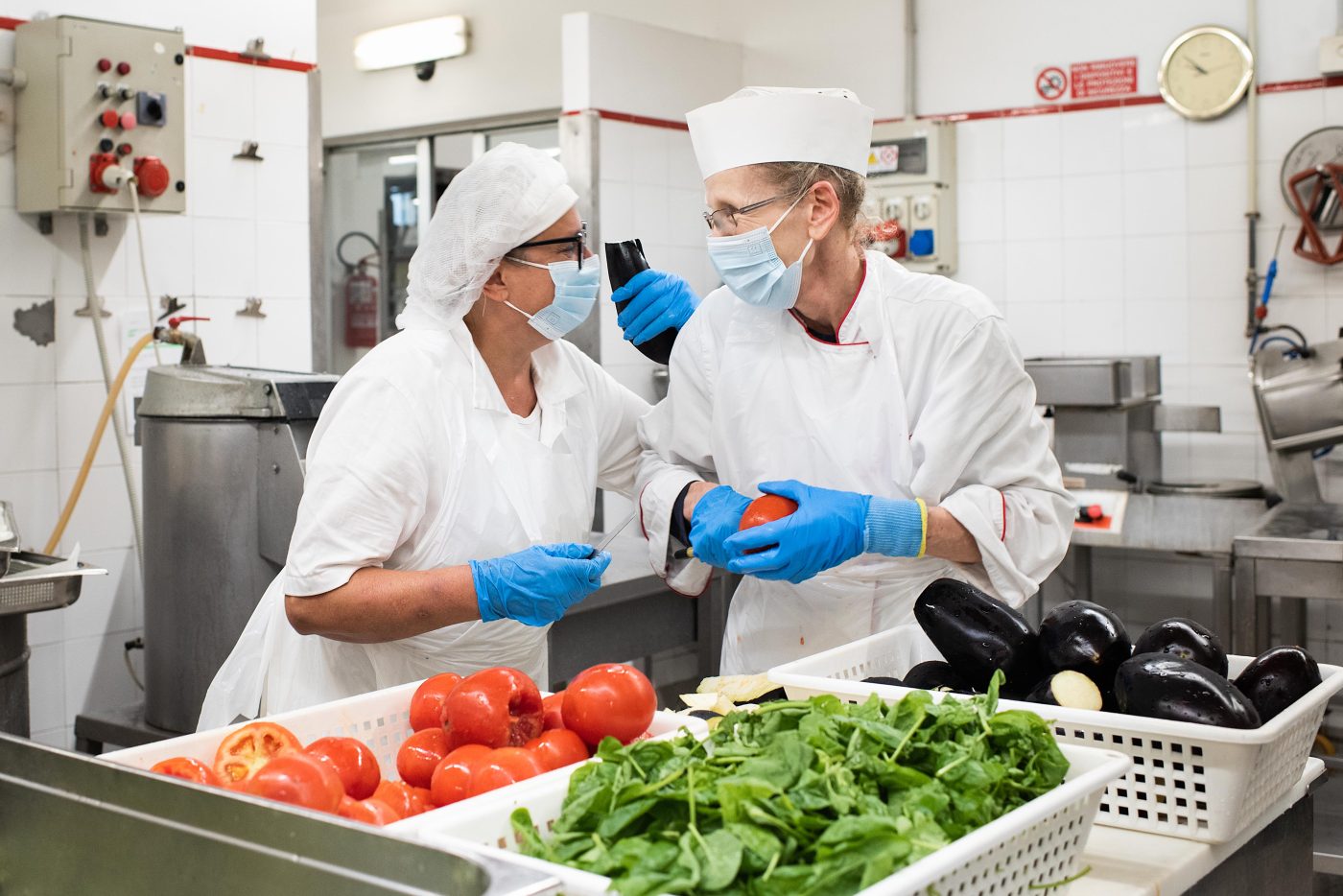

He is loved by an entire city – Bologna, where he founded Cucine Popolari together with his wife – and by everyone who has met him or come across his initiatives. He is Roberto Morgantini, the creator of one of the most interesting social food projects: a network of community kitchens for people in difficulty, where the aim is not just to prepare and serve meals, but to rebuild a fabric of humanity around the guests.
We don’t call ourselves canteens. A canteen is somewhere you go in and come straight out of: basically you eat and leave, eat and run.
Covid, of course, brought the world to its knees – Italy, the country, Bologna, and naturally the Cucine Popolari too. It was a particularly intense and painful time, also in terms of relationships and of what we had managed to build with the Cucine Popolari.
During that period demand from our guests doubled. Across the three kitchens we went from 250 to 500 people, so we have a very broad range of guests: the unemployed, the elderly, people who have been out of work for a long time, the father who in effect had to choose to leave home and truly has nothing left to live on.
What we avoided was it becoming a ghetto for the poor, because the canteen is often seen as the place where the desperate, and only the desperate, or the poor, go.
No, we also look out for others – who, for example? For people who are alone.
With Camst, what can I say, there is a special relationship, because from the very first moment Camst has always stepped in and shown an interest in supporting us and experiencing together some of the things we basically have in common: care and sensitivity towards others, towards people.
With the arrival of President Francesco this relationship grew considerably; it became almost daily, with constant interest in understanding what to do together and what is possible. And we have come up with and proposed many things together.
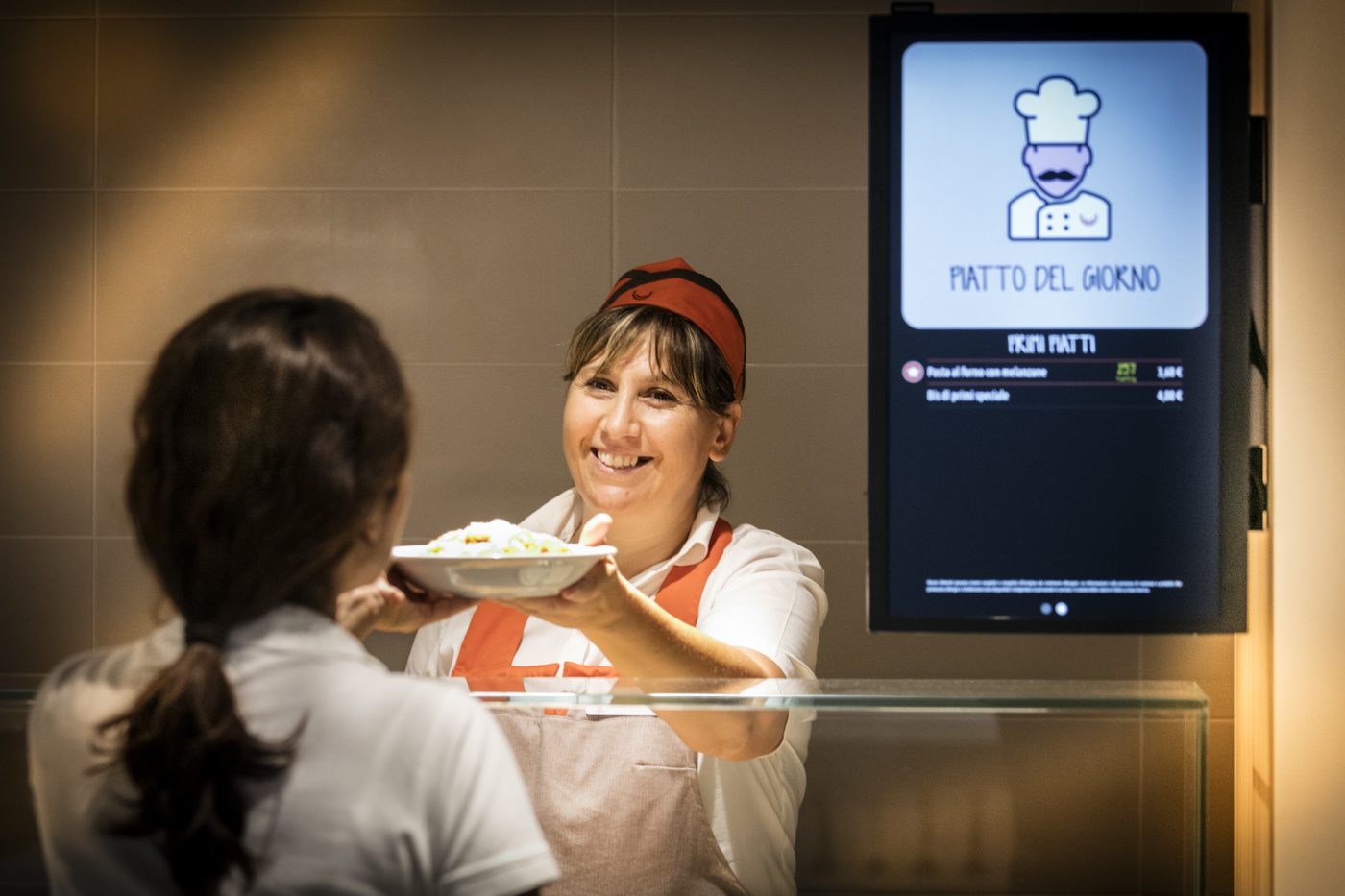
For instance, in the city centre and at the Bassotto we launched the “suspended dish” campaign, the “suspended lunch”.
In 15 days we collected something like 405 people – 405 Camst customers who offered lunch to someone they didn’t know, someone they had never seen. They did this out of solidarity.
To Camst there is certainly a sign of recognition, because we share a lot of what needs to be done for people and for those who are most left behind.
So what can I say?
Thank you, Camst!