
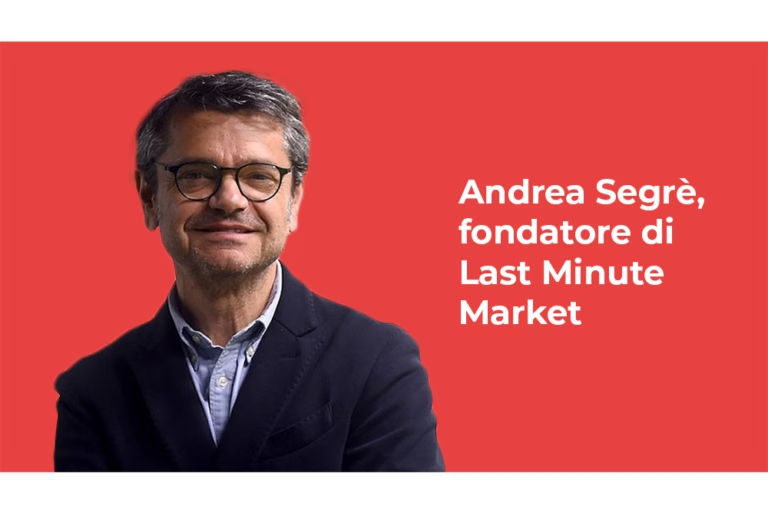
An Italian agronomist and economist, he is Full Professor of International and Comparative Agricultural Policy at the University of Bologna and Scientific Director of the Waste Watcher Observatory for the circular economy. Founder of Last Minute Market and creator of the Spreco Zero (Zero Waste) campaign, he explains how food waste is much more than what is left on the plate, and how everyone can do their part.
Voiceover:
Welcome to Voiceover, the podcast series produced by Camst group to share good sustainability practices: an episodic account of professional, life and activist experiences, told in the voices of the people who lived them.
Andrea Segrè:
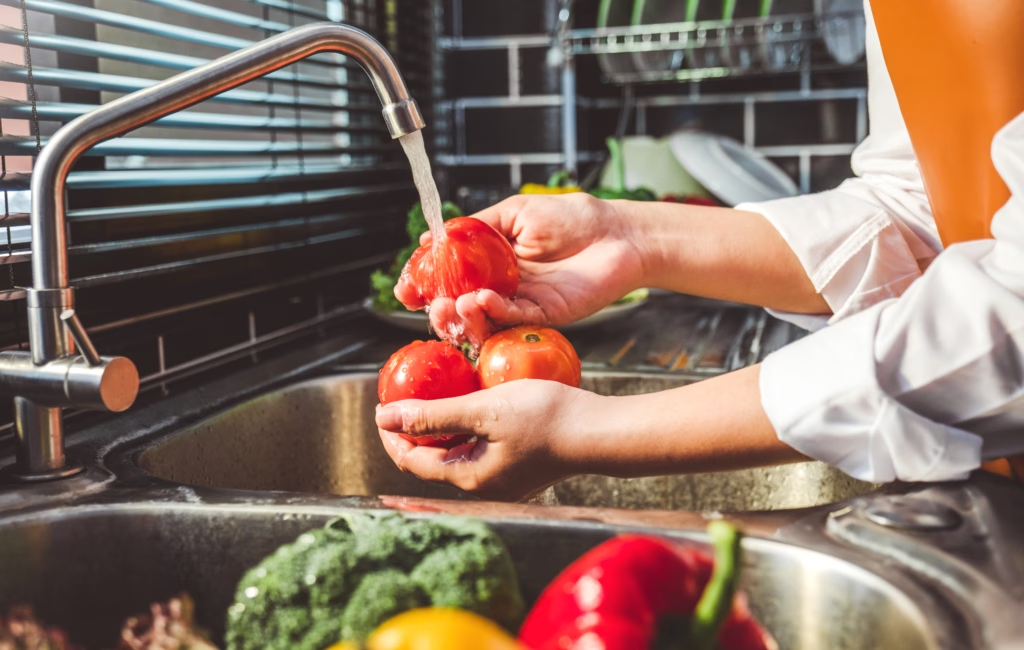
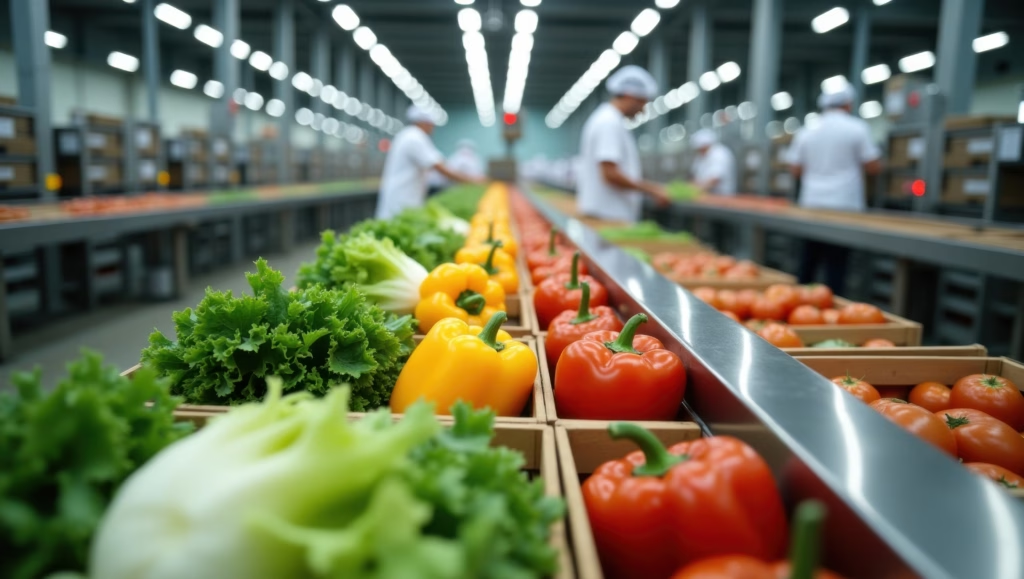
I’m Andrea Segrè, a professor at the University of Bologna and founder of Last Minute Market, a spin-off that for many years now – 20 – has been working to prevent food waste. We think of food waste as something left on the plate, and that’s true, yet there is a whole supply chain upstream, starting in the fields, that we perhaps know too little about, and that may represent a kind of hidden cost or hidden path of waste. Because when we leave some meat, pasta or vegetables on our plate, we should actually remember – and often we don’t know it, or forget it – that upstream, to produce an agricultural product that then becomes the food we eat, we need resources, natural resources. Think of water, energy and, of course, land, the first resource we need. These resources are not scarce, as some think, but they are limited, and moreover we consume them so quickly that they cannot regenerate in time. Then, once we combine these resources with our know-how – sowing, irrigating, planting, harvesting and so on – the food takes shape, is processed, then transported and distributed, ends up in a canteen or a shop, and finally reaches our plate. There is a life cycle, a supply chain as we say, longer or shorter, but all these steps, from field to table, from pitchfork to fork, actually have a cost. On the one hand they consume resources that can be assessed through life-cycle analysis; and in the end, if we don’t actually consume this product – if we waste it, throw it away prematurely while it is still good – we are truly throwing away not only economic capital, because we paid for the product, but also, and I would say above all, natural capital, which can be estimated and assessed very precisely. And then, absurdly – and this is the end of the story, of this cycle – the product that is still good has to be disposed of: we have to throw it into the rubbish and pay a tax, a fee, on it. This is another cost which, to tell the truth, is not so much hidden as obvious. Behind and within the plate there is a story, a cycle. Let’s not waste. Besides, it makes no sense today that so much good food still ends up in the bin, when it could be recovered for solidarity and charitable purposes, because, as we know, part of the population struggles to make ends meet and has no access to food, and the pandemic has greatly increased this. The pandemic has given us a two-faced Italy. I called it the Food Divide: the food gap was there before, but it has widened. Those who were at home and had access to food could buy it. From this point of view the lockdown was very interesting to analyse. We have an observatory called Waste Watcher and we worked on this. We saw very significant attention not only to waste – we also wasted much less – but to food management itself: targeted shopping, quality, the Mediterranean diet, reading labels, understanding expiry dates, even leftover cooking. On the one hand we stayed at home; on the other, the economic situation led to severe impoverishment, especially for the part of the population that had no access to relief payments or state support, and access to food fell further. Caritas and now Istat have estimated that there are 5.6 million people in absolute poverty, almost 10% of the Italian population. That is the food divide. The glass half full: those who had access to food must keep up this virtuous behaviour, a kind of accelerated food education we all received. The glass half empty, which we must fill: we must help those who have no access to food. We can all do something to fight food waste. At a personal, private level, as citizens and consumers, and as companies too, what can we do? We must learn, or relearn, that food has value. Not only must it not be thrown away – which would be a kind of first secular commandment – but I would also say we must understand that it has value for our health. All the medical studies by our nutritionist colleagues show, for example, that following the Mediterranean diet lengthens life. Moreover, that type of production and that type of consumption of Mediterranean products not only represent our tradition, our identity and our history, but also have a positive impact on the environment. So why not pay attention to what we eat, starting with not wasting it? Companies are already doing a lot. Working towards the sustainability goals of the UN 2030 Agenda – which, I would remind you, since we are in 2021, is just around the corner – also calls, in Goal 12, more precisely target 12.3, for halving food waste globally. It is an important goal. With the Spreco Zero campaign we have gone further, in the sense that we have set the target at the lowest number, zero, because we want to reach it, possibly even sooner. And companies have a very important role in becoming more efficient and more sustainable: reducing what is thrown away upstream and recovering it downstream – waste in company canteens and along the entire supply chain. So, from farms, which are businesses, to processing industries, to large and small retailers, all the way to corporate caterers, what is in excess, the surplus, can be recovered for solidarity purposes. Many years ago, more than 20, we set up a solidarity-based and sustainable system, Last Minute Market, but there are many other projects in our country that do the same, precisely to match a potential donor who has an excellence with a potential beneficiary who has a need. This exchange is really an exchange of souls, of relationships, as anthropologists would say, because there is no longer a price – indeed there is a cost, as the surplus has to be disposed of – but there is an exchange, a relationship between those who give and those who receive that strengthens bonds. This is what companies do through Last Minute Market: a relational value that is, in fact, the solidarity of our society.